The mandate of the Ontario Ministry of Health is to administer the province’s health care system and to provide quality health care for all people in Ontario. So why is the province ignoring concrete evidence to close ten supervised consumption sites (SCS), including our own Kensington Market Overdose Prevention Site? That is the backdrop for the legal action taken to stop Ontario’s Community Care and Recovery Act.
The Act stipulates that any new SCS must be farther than 200 metres from a school or child care location. However, the details of the Act, and public statements by the Province, show the true intention is to focus on abstinence, and disregard the proven benefits of harm reduction.
To prevent the inevitable increase in overdose deaths due to SCS closures, The Neighbourhood Group Community Services (TNGCS) launched a Charter Challenge in December 2024, stating that the Act violates the Canadian Charter of Rights and Freedoms, and is unconstitutional because it encroaches on Canada’s exclusive jurisdiction over criminal law. Support for the Challenge was broad, including from co-applicants, Katie Resendes and Jean-Pierre Aubry Forgues, the HIV Legal Network, and lawyers Rahool Agarwal and Carlo Di Carlo, who donated their time to represent TNGCS.
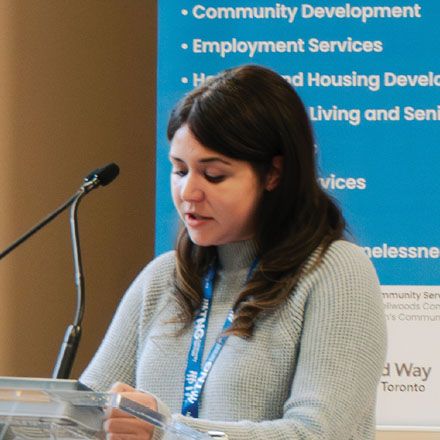
The need for supervised consumption sites was stated clearly by Katie at the press conference annoucing the Challenge. “Closing supervised consumption sites won’t fix the problem—it will simply push it into less regulated, more dangerous spaces, putting even more people at risk. We are in an opioid crisis, and removing these sites causes great harm. It will not make these areas safer. On the contrary, it will increase public drug consumption and the risk of overdose deaths.”
From the time the Challenge was launched until the case was heard on March 24 and 25, 2025, the future of these life-saving SCS was always in the public eye, whether it was the mass coverage in the media, rallies, and op-ed’s from former mayor John Sewell and Premier Kathleen Wynne, or information sessions from organizations like TNGCS involved in the case, or ones speaking out in support.
While the court has not rendered its final decision as of September 2025, we are pleased to have received an injunction allowing us to continue our important work: to support people who use substances and improve the quality of their lives.